How To Prevent Bedsores In A Bedridden Patient
Bedsores can form in a matter of hours. A practical guide for families caring for someone at home.
22 July 2026 · 2 min read

What A Bedsore Is And Why It Matters
A bedsore forms when constant pressure cuts off blood flow to the skin. It can begin within two to four hours in a patient who does not move at all.
The earliest stage looks like a red patch that does not fade when pressed. Left alone it can become an open wound reaching muscle and bone, needing hospital treatment.
The Highest-Risk Areas
Check these areas every time you change a pad or bathe the patient:
- Tailbone and buttocks — the most commonly affected area
- Heels and ankles
- The back of the head
- Elbows and shoulders
- The side of the hip in patients who lie on their side
Use good lighting. On darker skin an early bedsore may look purplish or simply darker than the surrounding skin, rather than red.
The Turning Schedule
The basic rule is every two hours. Rotate the patient through a cycle: left side, back, right side, repeat.
- Lower the side rail and raise the bed to your waist height
- Bend the patient’s knees to make the turn easier
- Roll the body as one unit — never pull on the shoulder alone
- Place a pillow behind the back to hold a 30-degree angle
- Make sure the heels are not resting on the mattress
Why 30 Degrees
Lying fully on the side at 90 degrees puts the entire body weight onto the hip bone. A 30-degree angle spreads that pressure far better.
What The Mattress And Bed Contribute
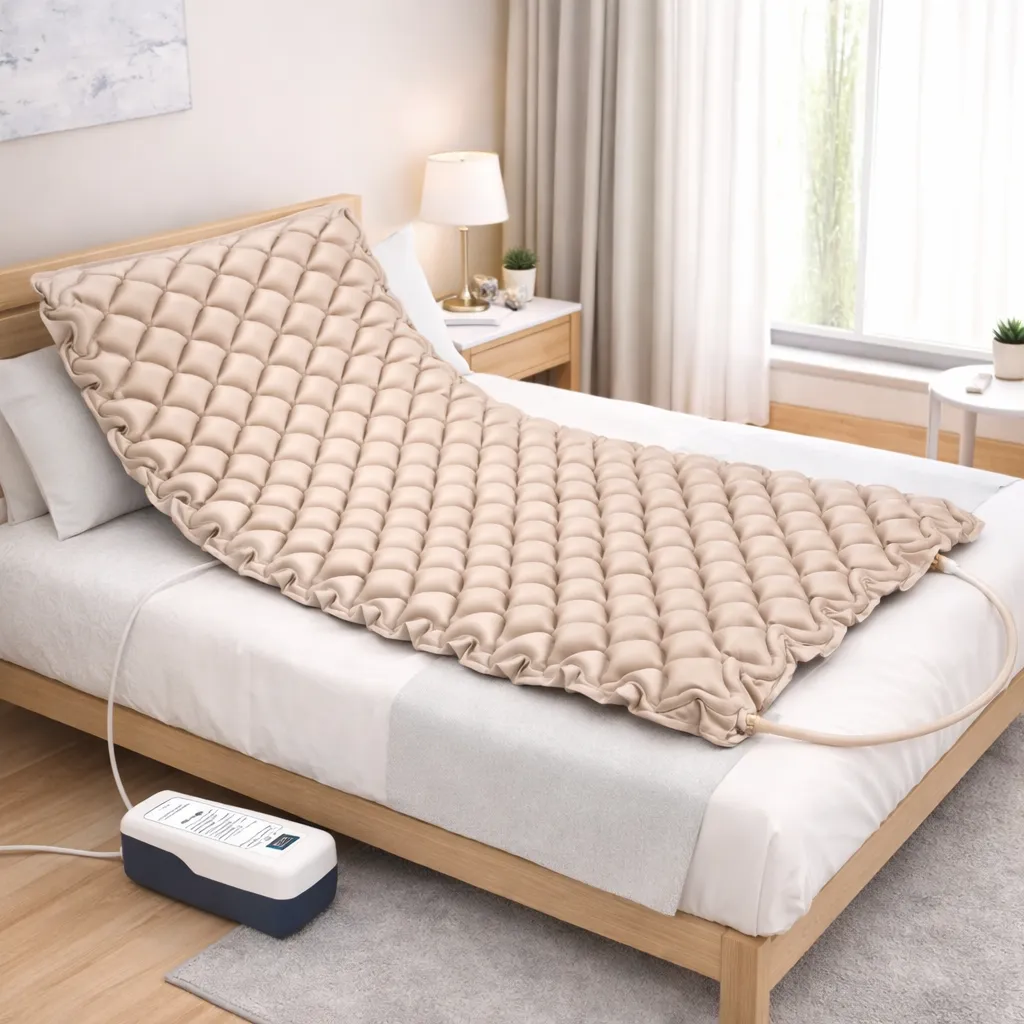
A ripple mattress inflates and deflates its air cells in turn, so no single point on the body carries constant pressure. It does not replace turning, but it widens the margin of safety.
A height-adjustable bed helps indirectly too — when turning is physically easier, carers actually do it consistently. See the bed options on our products page, or check delivery coverage for your area.
Daily Skin Care
- Dry the skin completely after washing, especially in skin folds
- Change pads as soon as they are wet — moisture softens skin and speeds breakdown
- Use an alcohol-free moisturiser on dry areas
- Never massage an area that is already red
- Keep the bedsheet smooth and free of creases
If a red patch does not fade within 30 minutes of the pressure being removed, call a doctor or nurse. That already counts as a stage-one bedsore.
For broader day-to-day guidance, read our stroke patient care guide.
We deliver hospital beds nationwide, including Ampang, Puchong and Kajang.