Ripple Vs Standard Mattress — Does Your Patient Need One?
When an anti-bedsore mattress genuinely helps, and when it just adds cost without benefit.
1 July 2026 · 2 min read
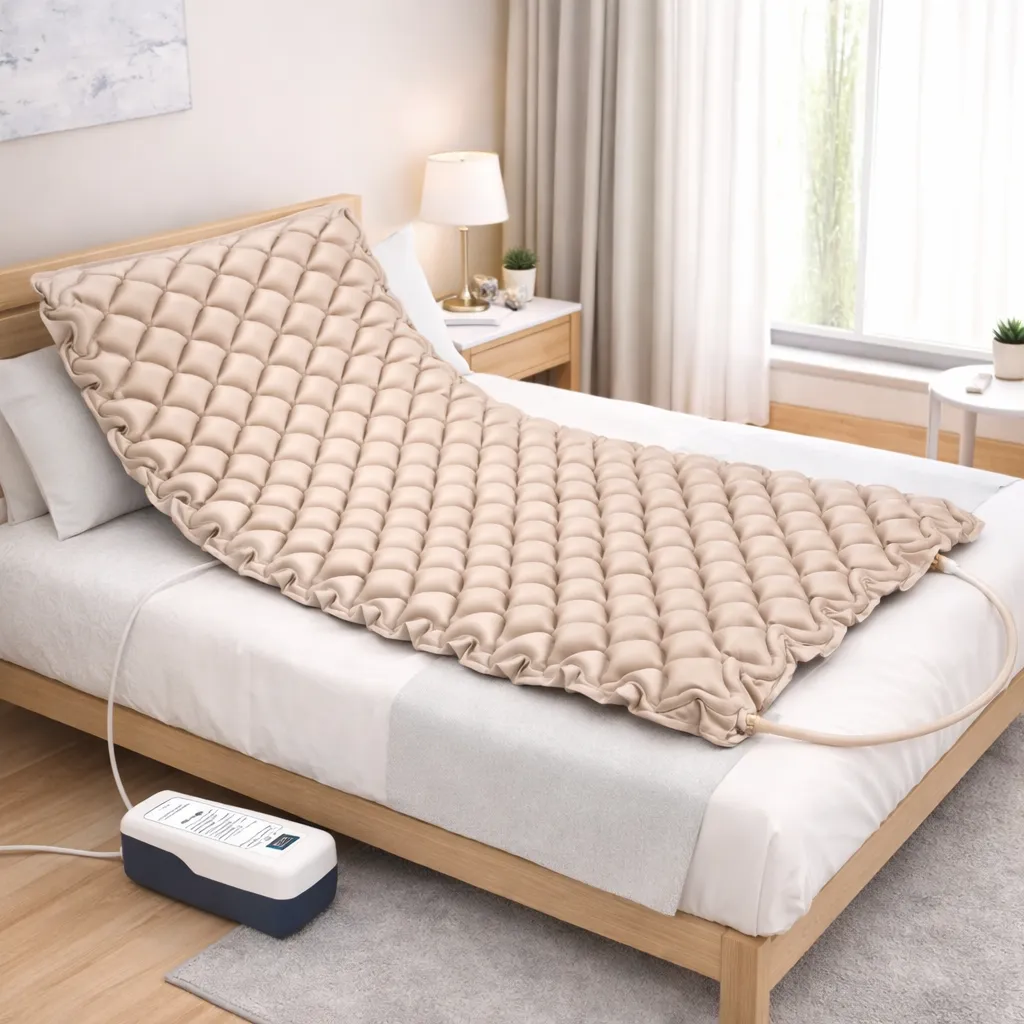
How A Ripple Mattress Works
A ripple mattress is made of rows of air cells that inflate and deflate in turn. A small pump at the foot of the bed shifts the pressure every few minutes.
The effect is that no single part of the body carries constant pressure. Blood flow to the skin recovers before damage can start.
Who Genuinely Needs One
A ripple mattress is not for everyone. It helps most for patients who cannot shift position at all on their own.
- Fully bedridden or paralysed patients
- Patients who have already had a bedsore before
- Very thin patients, where bones protrude
- Patients lying down more than 16 hours a day
If the patient can still adjust their own position in bed, a good foam mattress is enough. That money is better spent on a better bed.
Quick Comparison
| Foam Mattress | Ripple Mattress | |
|---|---|---|
| Needs electricity | No | Yes, continuously |
| Noise | Silent | A soft pump hum |
| Suits long-term use | Moderate | Very good |
| Maintenance | Minimal | Pump needs checking |
Some families use both — a foam mattress as the base, with a ripple overlay on top.
Looking After A Ripple Mattress
- Check the pump daily — make sure it still runs and cycles
- Do not place a thick mattress topper or towels over the air cells
- Use a single thin sheet so the pressure relief still works
- Wipe the surface with a damp cloth — never soak it
- Set the pressure dial to match the patient’s weight
The most common mistake is piling too many layers on top. That blocks the alternating action and makes the mattress useless.
Read our full bedsore prevention guide too, and see the mattress options on the products page. For a specific recommendation, reach our team via your local area page.
We deliver hospital beds nationwide, including Kuala Lumpur, Klang and Kajang.